الوضع الليلي


 8:27:17
  2019-01-07
  1876
1876
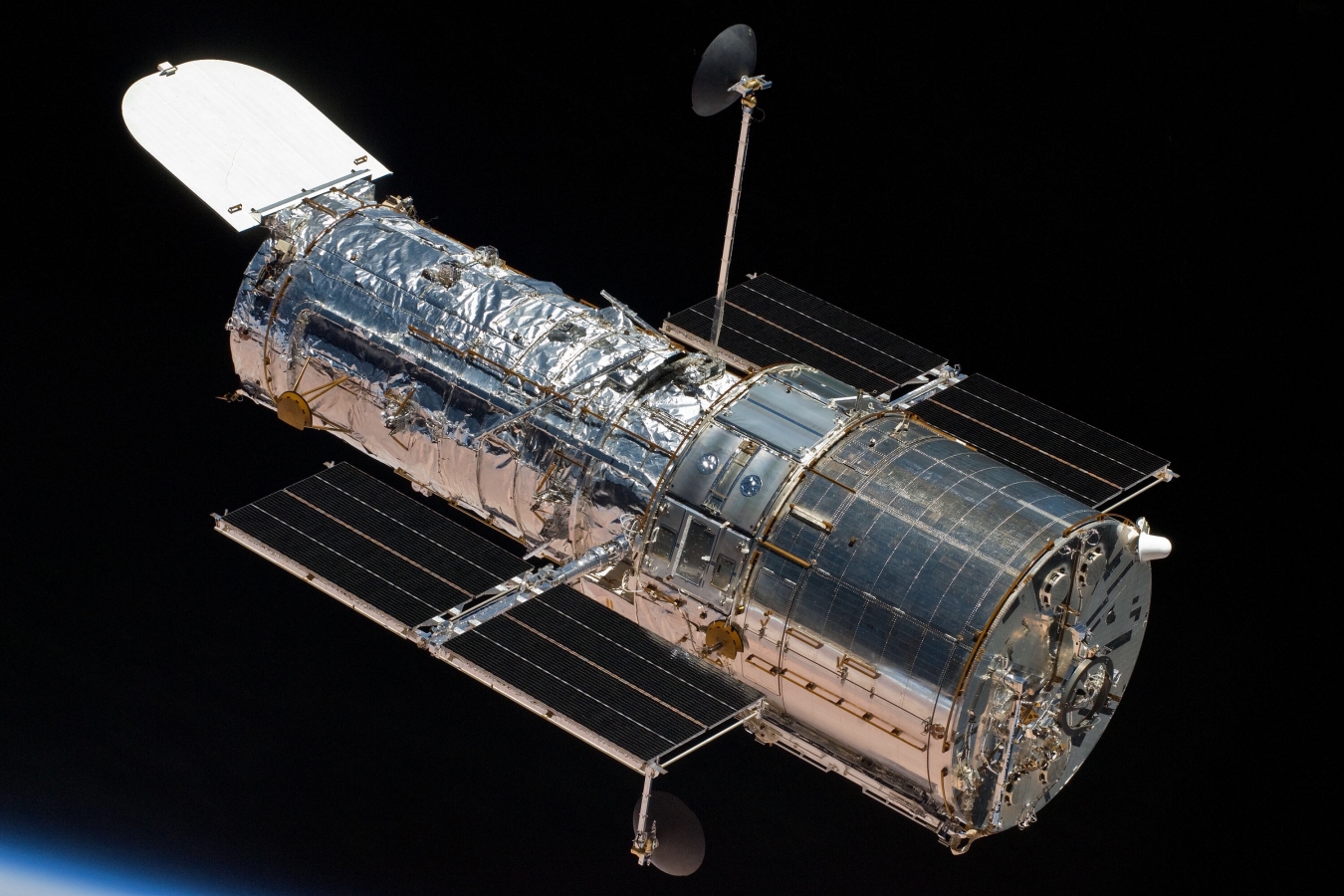
Engineers at the Massachusetts Institute of Technology (MIT) have proposed that in the near future giant telescopes like NASA's upcoming James Webb Space Telescope might be replaced by large number of tiny spacecraft working in tandem.
In a bid to study planets beyond our solar system, NASA engineers are developing designs for next-generation space telescopes. These include "segmented" telescopes with multiple small mirrors that could be assembled or unfurled to form one very large telescope once launched into space.
To keep these mega-scopes stable, the team from the MIT said that small satellites can follow along, and act as "guide stars," by pointing a laser back at a telescope to calibrate the system, to produce better, more accurate images of distant worlds.
Using the laser light from the second shoebox-sized spacecraft to stabilise the system relaxes the demand for precision in a large segmented telescope, saving time and money, and allowing for more flexible telescope designs, they explained.
"The study suggests that in the future, we might be able to build a telescope that's a little floppier, a little less intrinsically stable, but could use a bright source as a reference to maintain its stability," said lead author Ewan Douglas, a postdoctoral student at the MIT.
"If imperfections in the telescope motor or gears were causing your telescope to track slightly faster or slower, you could watch your guide star on a crosshairs by eye, and slowly keep it centred while you took a long exposure," he added, in the paper published in the Astronomical Journal.
Douglas noted that a single guide star could conceivably follow a telescope's "gaze," travelling from one star to the next as the telescope switches its observation targets.
However, this would require the smaller spacecraft to journey hundreds of thousands of miles paired with the telescope at a distance, as the telescope repositions itself to look at different stars.
Instead, a small fleet of guide stars could be deployed, affordably, and spaced across the sky, to help stabilise a telescope as it surveys multiple exoplanetary systems, Douglas said.
The study also showed that the new laser guide star designs are feasible with existing technologies, and that the system could fit entirely within a SmallSat about the size of a cubic foot.
Reality Of Islam |
|

A study of
Researchers
MIT enginee
 9:3:43
2018-11-05
9:3:43
2018-11-05
10 benefits of Marriage in Islam
7:5:22
2019-04-08
benefits of reciting surat yunus, hud &
9:45:7
2018-12-24
advantages & disadvantages of divorce
11:35:12
2018-06-10
6:0:51
2018-10-16
bahlool & the throne of haroun rashid
8:20:35
2018-06-21
8:25:12
2022-03-09
9:42:16
2022-10-19
1:38:41
2021-12-08
2:2:13
2022-10-08
6:0:8
2023-03-19
9:50:37
2023-02-28
5:41:46
2023-03-18
| LATEST |
 HOME
HOME