الوضع الليلي


 1:8:12
  2026-05-19
  1227
1227
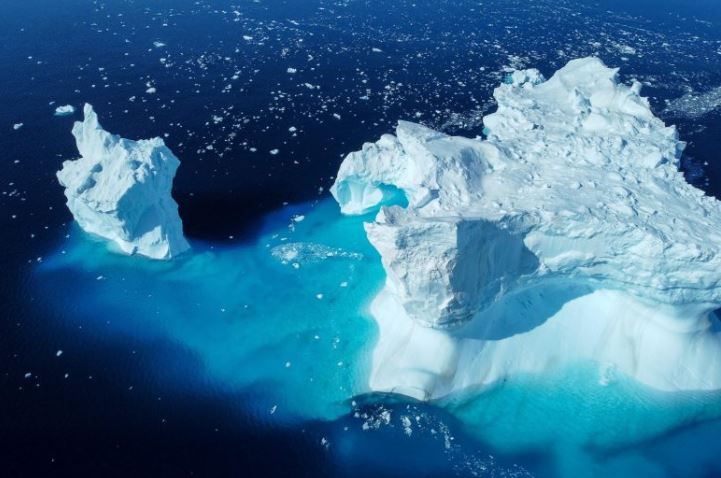
Hidden warm-water traps beneath Antarctica may be melting the continent’s ice far faster than scientists realized.
Global sea levels could rise faster than scientists once predicted, according to new research pointing to a hidden source of Antarctic ice loss. The study suggests that warmer ocean water is melting Antarctic ice shelves from underneath much more efficiently than expected.
Ice shelves are giant floating extensions of glaciers that help slow the movement of massive amounts of ice into the ocean. Researchers in Norway have now identified a process that may weaken these natural barriers. Long channel-like formations beneath the ice shelves can trap relatively warm seawater, dramatically increasing melting in specific areas.
If these ice shelves become thinner and less stable, the glaciers behind them may flow into the sea more quickly. That could speed up global sea level rise well beyond many current estimates.
Scientists have already seen similar patterns in other parts of Antarctica. The Intergovernmental Panel on Climate Change (IPCC) has identified unstable polar ice shelves as a major climate concern, although the process remains difficult to fully understand and model.
Hidden Channels Beneath Antarctic Ice Shelves
The team focused on the Fimbulisen Ice Shelf in East Antarctica to better understand how underwater melting occurs. Their results showed that the shape of the underside of the ice shelf has a major influence on how ocean water circulates below it.
In areas where the underside contains channels, water movement can form small circulation systems that keep warmer water trapped against the ice rather than allowing it to move away. This lingering heat intensifies melting in those regions.
Researchers found that melting rates inside these channels can increase by roughly an order of magnitude locally. In simple terms, the shape of the ice shelf determines where ocean heat gathers and how much melting it can trigger.
“We found that the shape of the ice shelf underside is not just a passive feature. It can actively trap ocean heat in exactly the places where extra melting matters most,” lead author Tore Hattermann from the iC3 Polar Reseach Hub in Tromsø, Norway explains.
Fimbulisen Ice Shelf lies in East Antarctica, an area generally considered colder and less vulnerable than other parts of the continent.
“We observed beneath the Fimbulisen Ice Shelf that even small amounts of warmer water can substantially increase melting within the channels,” Tore Hatterman says. “As a result, the channels can grow and, in the worst case, weaken the stability of the entire ice shelf.”
Qin Zhou, who co-led the study, adds that “What is striking is that even modest inflows of warmer deep water can have a large effect when the ice shelf base is channeled. That means some ice shelves that scientists usually think of as cold may be more fragile than expected.”
Modeling Antarctic Ice Melt
To study the phenomenon, researchers combined a detailed map of the underside of the Fimbulisen Ice Shelf with a high-resolution computer model of the ocean cavity beneath it.
The team compared simulations using smoother ice shelf bases with versions that included realistic channels, under both cooler and slightly warmer ocean conditions. This approach allowed them to isolate how the channels affect water circulation, mixing, and melting.
The work also incorporated earlier field observations from the region. Researchers say combining long-term measurements with advanced modeling is critical for understanding the small-scale features hidden beneath Antarctic ice shelves. Hattermann himself has spent hundreds of days conducting fieldwork on Antarctic ice shelves.
Why Faster Antarctic Ice Melt Matters
Scientists warn that stronger melting within the channels could create a dangerous cycle. As channels deepen and widen, parts of the ice shelf may thin unevenly, weakening the shelf’s overall structure.
A weaker ice shelf is less able to slow the glaciers behind it, potentially allowing more land ice to flow into the ocean.
“Current climate models do not capture this effect,” Tore Hattermann warns. “This means that they risk underestimating the sensitivity the ‘cold’ ice shelves along East Antarctica’s coastline to small changes or warming in coastal waters. Such changes have already been observed, and are projected to increase in the future.”
The findings could have major implications for climate science and coastal planning. Researchers say ice sheet and climate models need to better account for these small-scale melting processes to improve future sea level projections. The changing flow of meltwater could also affect ocean circulation and marine ecosystems around Antarctica.
Reality Of Islam |
|
Plants are
After spend

A study of
Researchers
 9:3:43
2018-11-05
9:3:43
2018-11-05
10 benefits of Marriage in Islam
7:5:22
2019-04-08
benefits of reciting surat yunus, hud &
9:45:7
2018-12-24
advantages & disadvantages of divorce
11:35:12
2018-06-10
6:0:51
2018-10-16
7:32:24
2022-02-14
12:10:56
2022-11-17
10:43:56
2022-06-22
5:58:12
2021-12-18
9:50:37
2023-02-28
7:26:19
2022-04-08
6:28:21
2022-12-20
5:41:46
2023-03-18
| LATEST |
 HOME
HOME