الوضع الليلي


 11:11:53
 2026-03-08
 1776
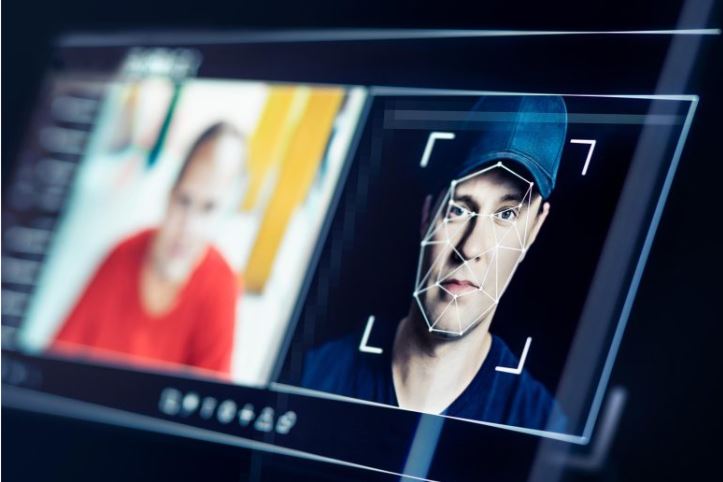
People with stronger object recognition skills are better at spotting AI-generated faces, according to new research. Intelligence and AI familiarity did not predict performance.
Could you reliably spot a computer-generated face in a lineup of real people?
As synthetic images become more common across news feeds and social platforms, the ability to separate authentic photos from AI creations is becoming increasingly important.
New research shows that one specific visual skill makes a measurable difference. People who are better at object recognition, meaning they can distinguish between visually similar objects with high accuracy, are also more likely to identify AI-generated faces correctly. The stronger this ability, the more accurately a person can tell whether a face is real or artificial. The study was conducted by Isabel Gauthier, David K. Wilson Chair and Professor of Psychology at Vanderbilt University, along with Jason Chow, Ph.D.’24, and Rankin McGugin, former research assistant professor in the Department of Psychology.
Object recognition predicts AI detection
The findings suggest that a broad visual skill, rather than technical knowledge, helps determine who is more resilient to digital deception. By identifying traits that make some individuals less susceptible to AI-generated misinformation, the research sheds light on how human perception operates in a rapidly changing visual landscape.
“These results highlight a visual ability that has very general applications,” Gauthier said. “It’s a stable trait that helps people meet new perceptual challenges, including those created by AI. We were shocked to see how intelligence or even technology training did not help accurately judge if a face is AI.”
Intelligence and training fall short
To explore these differences, the researchers created the AI Face Test, the first assessment designed to measure how well individuals can distinguish real faces from AI-generated ones. Their results showed that factors many might expect to matter, such as intelligence, familiarity with AI tools, or even strong face recognition skills, did not reliably predict performance. Instead, the clearest indicator was object recognition ability.
“We were interested not just in examining whether people are able to differentiate between a real face and an AI-generated face, but in comparing people on their ability to perform this task and see if we could predict the performance using object recognition,” Gauthier said. “This approach is very novel—there’s not a lot of people who study individual differences in object recognition. In vision, there’s a tradition of looking at the average of a group. Nobody has been asking these questions, and we have a lot to learn about how people do these things.”
A broad visual skill at work
Participants with stronger object recognition skills consistently performed better at spotting AI-generated faces, and their results remained consistent when tested again later. This same visual capacity has been linked in other studies to success in a wide range of tasks, including detecting lung nodules in chest X-rays, identifying cancerous blood cells, reading musical notation, and determining sex from retinal images.
Taken together, the results indicate that a general visual processing ability, rather than experience with technology or specialized face expertise, helps some people navigate the growing challenge of distinguishing real images from synthetic ones.
“There is this general message we hear in the media that AI images are so realistic that we can’t tell the difference, and I think that’s misleading,” Gauthier said. “I think there’s a lot of messaging indicating that we can’t differentiate, when in fact, what you have is a distribution of people. There are some who can’t tell the difference, and then there are some who are doing it great, and then there’s some who are doing it okay. As AI becomes ever present in our reality, I think it’s useful to know that some people are better at this than others.”
Reality Of Islam |
|
Metal foam

By filling

Scientists
 9:3:43
2018-11-05
10 benefits of Marriage in Islam
7:5:22
2019-04-08
benefits of reciting surat yunus, hud &
9:45:7
2018-12-24
advantages & disadvantages of divorce
11:35:12
2018-06-10
6:0:51
2018-10-16
8:25:12
2022-03-09
9:39:36
2022-12-28
3:42:22
2021-12-24
7:26:19
2022-04-08
1:16:44
2018-05-14
8:3:0
2018-06-21
a hero waters thirsty wild animals
9:4:9
2022-01-06
5:41:46
2023-03-18
| LATEST |
 HOME