الوضع الليلي


 12:58:7
 2026-11-25
 17
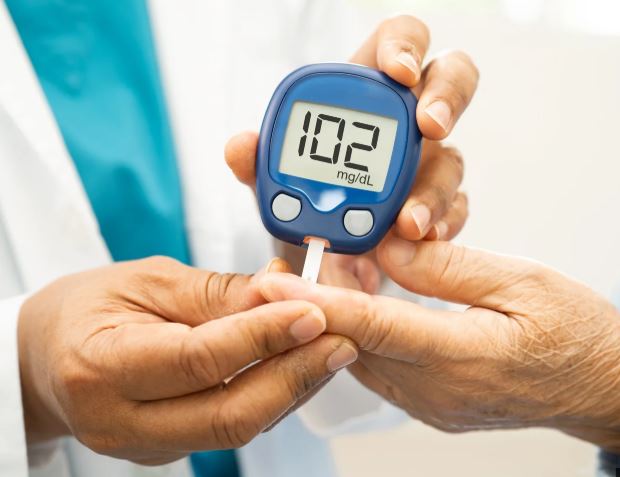
A discovery in animal muscle suggests that the body’s natural ability to absorb sugar without insulin could be harnessed to develop new diabetes treatments.
For people with diabetes or insulin resistance, controlling blood sugar can be difficult because their muscles do not respond effectively to insulin, the hormone that helps move glucose from the bloodstream into cells. Muscles, however, have another way of absorbing glucose that does not require insulin. Understanding how this process works could give researchers an entirely new way to treat high blood sugar.
Scientists at the University of Cincinnati (UC) College of Medicine have identified a previously unknown pathway that allows skeletal muscles to absorb glucose independently of insulin. Their findings, published in the Nature Portfolio journal Communications Biology, could provide a new target for treating diabetes, hyperglycemia, and insulin resistance.
Glucose uptake surges during exercise
Skeletal muscle makes up about 40% of the human body and plays a major role in regulating blood sugar. After a meal, rising insulin levels stimulate muscles to absorb and store up to 90% of ingested glucose through a transport protein called GLUT4, which helps glucose enter muscle cells.
During exercise or stress, insulin levels drop, yet working muscles can absorb glucose at rates up to 100 times higher than after a meal to meet the energy demands of contraction. How muscles manage this without insulin has remained a mystery despite decades of research.
To investigate, the researchers developed a way to measure glucose uptake independently of insulin. They used glucose derivatives that could be carried by a family of transport proteins known as SGLTs but not by GLUT4. The team tested these derivatives in isolated muscles from animal models, using electrical stimulation to reproduce the contractions of working muscles.
“We showed that if we stimulate muscle to contract in insulin-free conditions, it can take up a lot of glucose from a pathway that’s not GLUT4,” said Judith A. Heiny, PhD, the study’s co-corresponding author and professor emerita in the Division of Neurobiology and Integrative Physiology in UC’s Department of Biomedical Sciences, whose laboratory led the research.
A potential drug target in muscles
The researchers named the newly identified pathway mSGLT. It shares properties with SGLT2, a glucose transporter in the kidneys that is already targeted by widely used diabetes medications such as Jardiance. These drugs lower blood sugar by increasing the amount of glucose expelled through urine. Targeting a similar transport mechanism in muscles could offer another way to remove excess glucose from the bloodstream.
“This insulin-independent process uses a glucose transport protein in skeletal muscle and may offer a drug target for controlling blood sugar,” said Heiny. “The skeletal musculature is the natural depot for glucose. It has a huge capacity to regulate blood sugar, which can be a struggle for those with diabetes and insulin resistance.”
“A therapy that targets glucose uptake by skeletal muscles could be as impactful as SGLT2 inhibitors that lower blood sugar by stimulating the kidneys to excrete excess glucose in the urine,” said Natalie Norman, PhD, the study’s first author. Norman contributed to the research as a UC graduate student and is now a postdoctoral researcher at the Karolinska Institute in Stockholm, Sweden.
The protein behind the pathway remains unknown
Working with collaborators at the Icahn School of Medicine at Mount Sinai, the team also developed a new technique for measuring glucose uptake using inductively coupled plasma mass spectrometry (ICP-MS), an analytical technique that could have applications beyond diabetes research.
“I expect our method will be ideal for studying biological processes that require simultaneous tracking of multiple molecules,” said Julio Landero, PhD, the study’s co-corresponding author and associate professor and director of a trace metals lab at Mount Sinai.
Although the researchers have established how the pathway behaves in isolated animal muscles, they have yet to identify the specific transport protein responsible or determine whether targeting it can improve blood sugar regulation.
“This study defines the core properties of mSGLT in muscle. Studies are underway to identify the gene and protein at the molecular level,” said Heiny.
Reality Of Islam |
|

By filling

Scientists

A simple ch
 9:3:43
2018-11-05
10 benefits of Marriage in Islam
7:5:22
2019-04-08
benefits of reciting surat yunus, hud &
9:45:7
2018-12-24
advantages & disadvantages of divorce
11:35:12
2018-06-10
6:0:51
2018-10-16
10:55:53
2022-06-13
al-hussain (peace be upon him)
10:18:1
2022-09-21
3:42:22
2021-12-24
1:34:8
2022-02-01
11:34:48
2022-06-29
7:45:39
2018-06-21
6:14:17
2018-06-21
5:41:46
2023-03-18
| LATEST |
 HOME