Grammar
Tenses
Present

Present Simple
Present Continuous
Present Perfect
Present Perfect Continuous
Past
Past Simple
Past Continuous
Past Perfect
Past Perfect Continuous
Future
Future Simple
Future Continuous
Future Perfect
Future Perfect Continuous
Parts Of Speech
Nouns
Countable and uncountable nouns
Verbal nouns
Singular and Plural nouns
Proper nouns
Nouns gender
Nouns definition
Concrete nouns
Abstract nouns
Common nouns
Collective nouns
Definition Of Nouns
Animate and Inanimate nouns
Nouns
Verbs
Stative and dynamic verbs
Finite and nonfinite verbs
To be verbs
Transitive and intransitive verbs
Auxiliary verbs
Modal verbs
Regular and irregular verbs
Action verbs
Verbs
Adverbs
Relative adverbs
Interrogative adverbs
Adverbs of time
Adverbs of place
Adverbs of reason
Adverbs of quantity
Adverbs of manner
Adverbs of frequency
Adverbs of affirmation
Adverbs
Adjectives
Quantitative adjective
Proper adjective
Possessive adjective
Numeral adjective
Interrogative adjective
Distributive adjective
Descriptive adjective
Demonstrative adjective
Pronouns
Subject pronoun
Relative pronoun
Reflexive pronoun
Reciprocal pronoun
Possessive pronoun
Personal pronoun
Interrogative pronoun
Indefinite pronoun
Emphatic pronoun
Distributive pronoun
Demonstrative pronoun
Pronouns
Pre Position
Preposition by function
Time preposition
Reason preposition
Possession preposition
Place preposition
Phrases preposition
Origin preposition
Measure preposition
Direction preposition
Contrast preposition
Agent preposition
Preposition by construction
Simple preposition
Phrase preposition
Double preposition
Compound preposition
prepositions
Conjunctions
Subordinating conjunction
Correlative conjunction
Coordinating conjunction
Conjunctive adverbs
conjunctions
Interjections
Express calling interjection
Phrases
Sentences
Clauses
Part of Speech
Grammar Rules
Passive and Active
Preference
Requests and offers
wishes
Be used to
Some and any
Could have done
Describing people
Giving advices
Possession
Comparative and superlative
Giving Reason
Making Suggestions
Apologizing
Forming questions
Since and for
Directions
Obligation
Adverbials
invitation
Articles
Imaginary condition
Zero conditional
First conditional
Second conditional
Third conditional
Reported speech
Demonstratives
Determiners
Direct and Indirect speech
Linguistics
Phonetics
Phonology
Linguistics fields
Syntax
Morphology
Semantics
pragmatics
History
Writing
Grammar
Phonetics and Phonology
Semiotics
Reading Comprehension
Elementary
Intermediate
Advanced
Teaching Methods
Teaching Strategies
Assessment

Action verbs and linking verbs
 المؤلف:
EVELYNP.ALTENBERG & ROBERTM.VAGO
المؤلف:
EVELYNP.ALTENBERG & ROBERTM.VAGO
 المصدر:
English Grammar Understanding the basics
المصدر:
English Grammar Understanding the basics
 الجزء والصفحة:
P27-C2
الجزء والصفحة:
P27-C2
 2025-11-01
 771
771


+
-
20
Action verbs and linking verbs
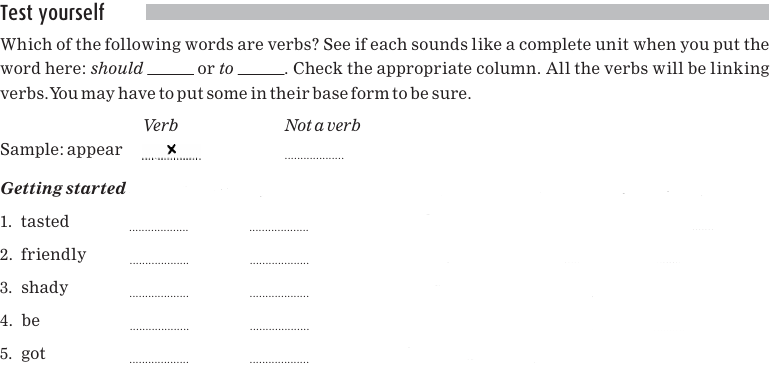
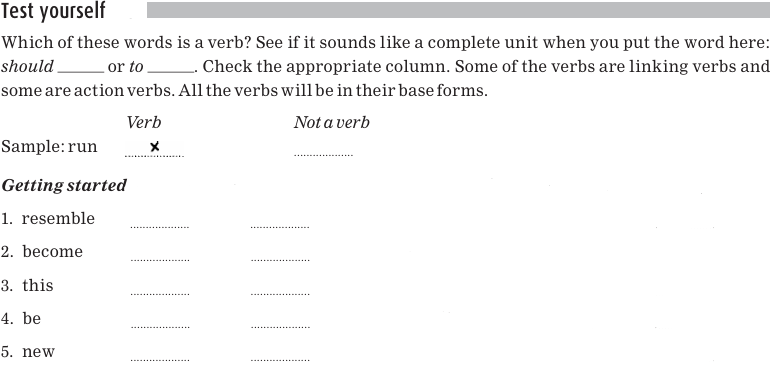
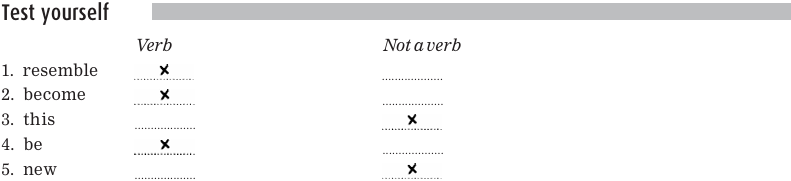
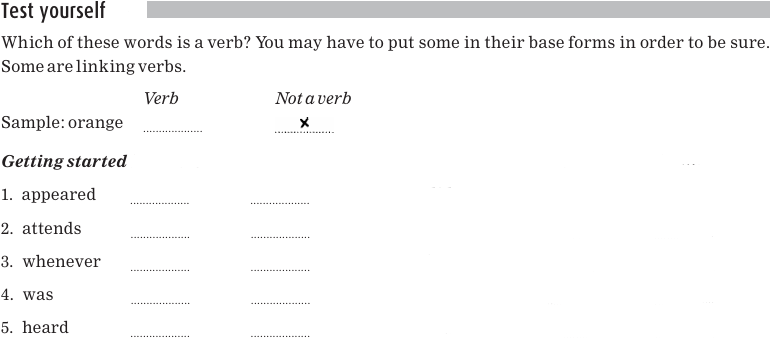
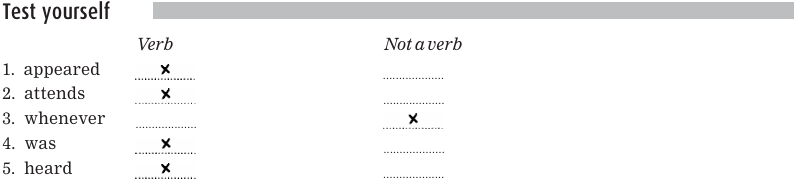
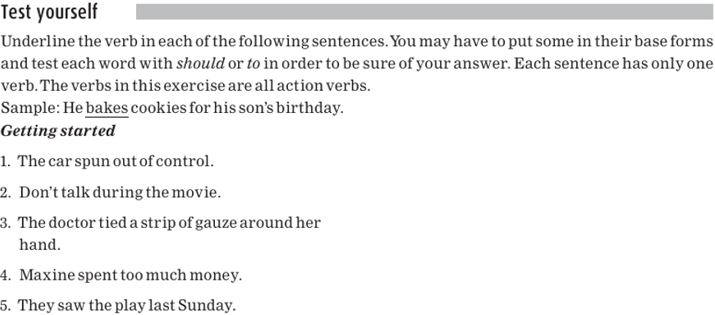
The verbs we have looked at so far, such as go, sing, and revise, all indicate actions. In fact, they’re called action verbs. However, there are other verbs which don’t indicate actions.
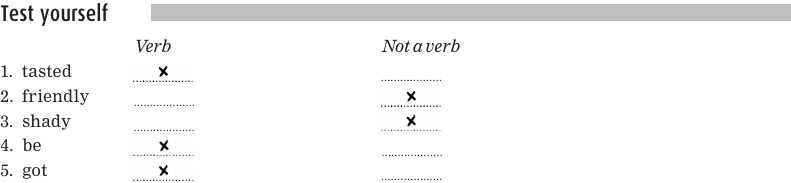
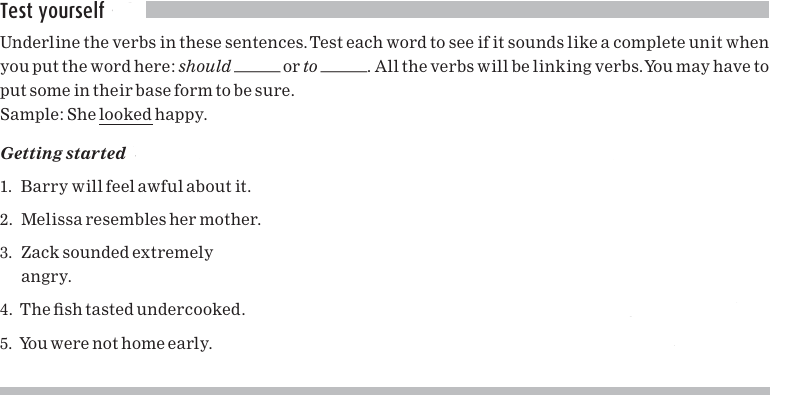
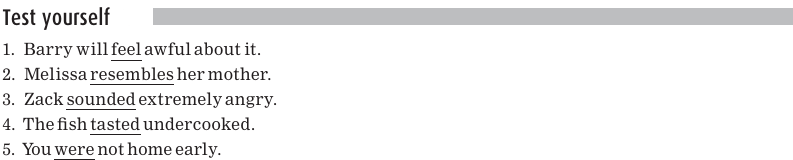
These are most commonly called linking verbs. One example of such a verb is the word seem, as in the sentences, You seem tired, They’ve seemed busy lately. Don’t worry, though: seem still follows our should or to rules: Harry should seem surprised at times; You don’t want to seem arrogant, do you? So even though seem isn’t indicating an action, it’s easy to identify it as a verb. Other examples of linking verbs are resemble and become. Linking verbs express a relationship between the noun or pronoun that comes before the linking verb and whatever follows it.
Answers
Answers
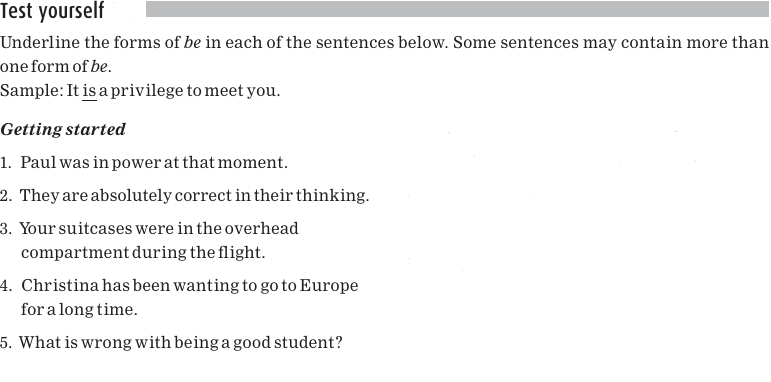
The most common linking verb is the verb be, often called the copula. You can see different forms of the verb be in the following sentences.
1. I am happy.
2. You are happy.
3. He is happy.
4. I was happy.
5. You were happy.
6. I have been happy.
7. He is being happy.
Notice how different these forms are from the base form of be. In fact, be is the most irregular verb in the English language: it has more forms than any other verb. But you can still use the should or to test to identify be as a verb: You should be happy, They decided to be happy. For convenience, the forms of be are indicated in Quick tip.
Quick tip
The forms of the irregular verb be are: am, are, is, was, were, be, been, being.
Note that be and become are two different verbs. Here are the forms of become: become, becomes, became, becoming.
Answers

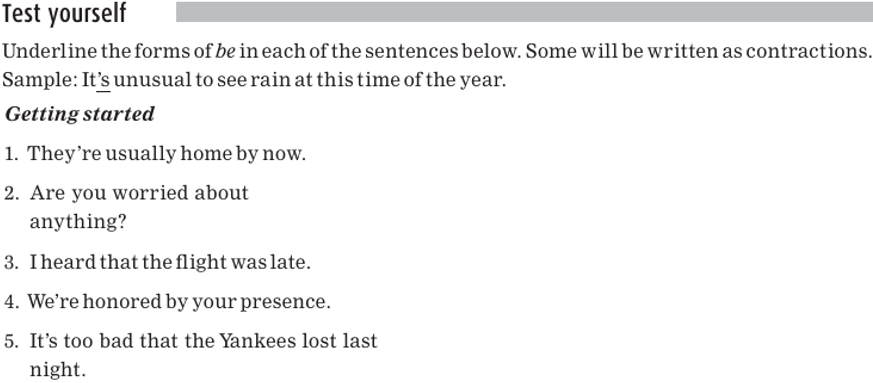
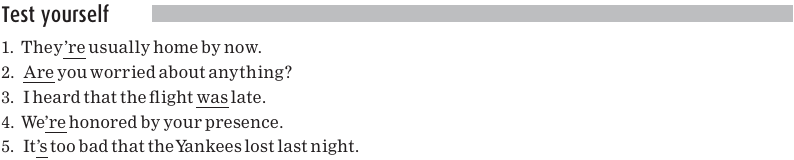
Often, forms of the verb be are said and written as contractions, as in these sentences:
8. I’m happy. (verb = am)
9. He’s happy. (verb = is)
10. We ’re happy. (verb = are)
11. He’s being happy. (verb = is)
These are all still sentences with be.
For more on the verb be.
Answers
Answers
Answers
Answers

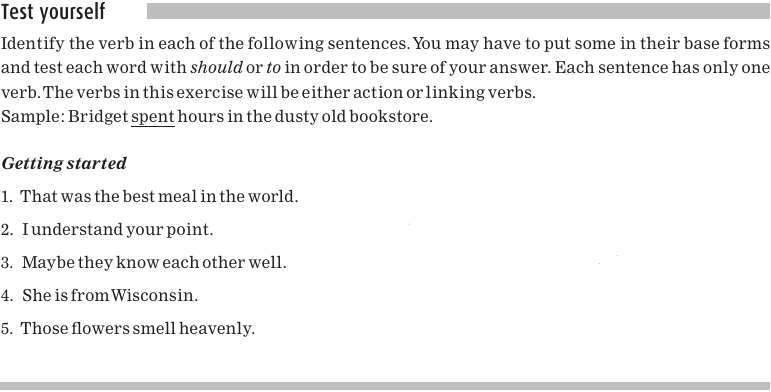
Answers
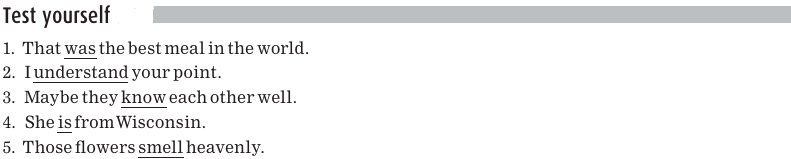
How can you determine if a verb is being used as an action verb or a linking verb? There are a number of differences between them. One way is to think of a linking verb as an equal sign (=). For example:
12. Harry resembles his brother.
Harry = his brother.
13. You are bored.
You = bored.
14. That strange looking vegetable tastes awful.
That strange looking vegetable = awful.
Resembles, are, and tastes are each being used here as linking verbs.
Another way to identify a linking verb is to see if you can substitute a form of be for it, and leave the meaning basically the same. For example, take the sentence John seems interested in the conversation. We can substitute a form of be, specifically, is, for seems: John is interested in the conversation. Thus, seems is a linking verb in the sentence John seems interested in the conversation. Take a look at some more examples.
15. After a while, the hotel became dingy.
After a while, the hotel was dingy
16. Annie and Janine. Look surprised.
Annie and Janine are surprised.
17. Although in his eighties, he remains youthful-looking.
Although in his eighties, he is youthful-looking
Thus, became, look, and remains are being used as linking verbs in these sentences. Remember that be and its forms can also be used as linking verbs. While the Quick tip below isn’t foolproof, it will usually help you identify whether a verb is an action or linking verb.
Quick tip If you can substitute a form of be for a verb and the meaning of the sentence is basically the same, the verb is probably being used as a linking verb. The verb be and its forms are also linking verbs.
Anotherwaytoidentifyalinkingverbistoseeifyoucansubstituteaformoftheword seem for it, and leave the meaning basically the same. For example, in the sentence, The hot shower felt soothing, we can substitute a form of seem for felt, and leave the sentence largely unchanged: The hot shower seemed soothing. Note the following examples:
18a. After a while, the hotel became dingy.
18b. After a while, the hotel seemed dingy
19a. Annie and Janine. Look surprised.
19b. Annie and Janine seem surprised.
20a. Although in his eighties, he remains youthful-looking.
20b. Although in his eighties, he Seems youthful-looking.
Thus, became, look, and remains are being used as linking verbs in these sentences. Again, while Quick tip below also isn’t fool proof, it will help you identify whether a verb is an action or linking verb.
Quick tip
If you can substitute a form of seem for a verb and the meaning of the sentence is basically the same, the verb is probably being used as a linking verb.
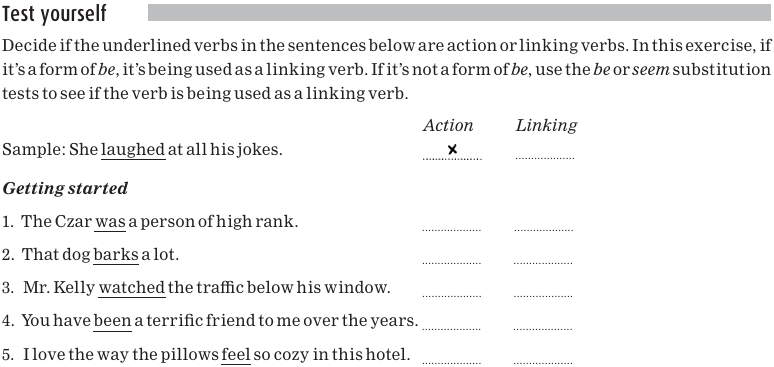
Answers
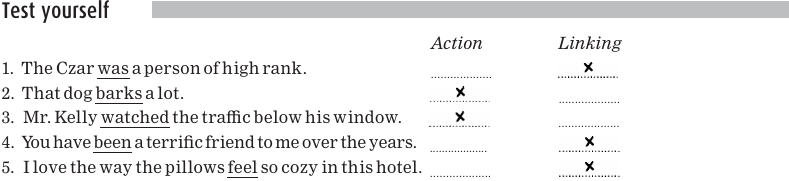
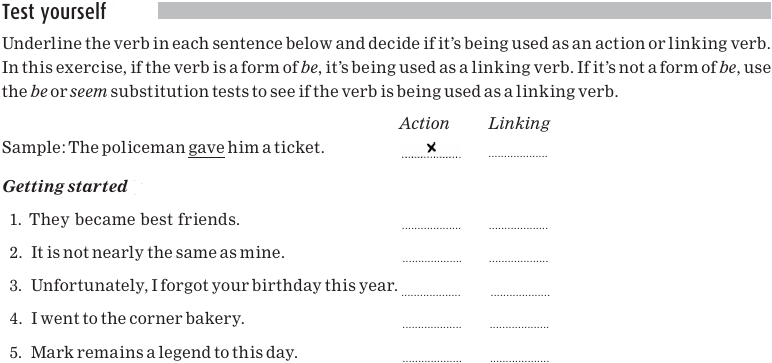
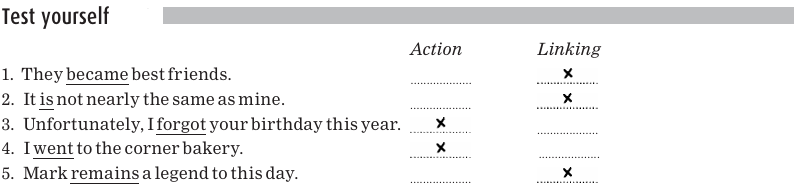
Answers
Hopefully you now have a good sense of the difference between action and linking verbs. However, there are some verbs that can be used as either an action verb or a linking verb, depending on the sentence that it’s in. Compare, for example, the following two sentences with feel:
21.Mary felt tired.
22.Mary felt the softness of the material.
In sentence 21, felt is being used as a linking verb. Note that Mary= tired; Mary is tired, Mary seems tired all make sense here. In sentence22, Mary is doing an action. Also, one can’t think of it as: *Mary= the softness of the material, * Mary was the softness of the mate rial, or* Mary seemed the softness of the material. That is, thinking of felt as an equal sign or substituting a form of be or seem for felt clearly doesn’t work here. Thus, insentence22, felt is being used as an action verb.
Here are a few more examples:
23.The dinner at that restaurant tasted delicious. (linking verb)
(The dinner at that restaurant was delicious.)
24. I tasted the soup. (action verb)
(*I was the soup.)
25.The flowers smelled heavenly. (linking verb)
(The flowers are heavenly.)
26. She smelled the fire before she saw it. (action verb)
(*She was the fire before she saw it.)
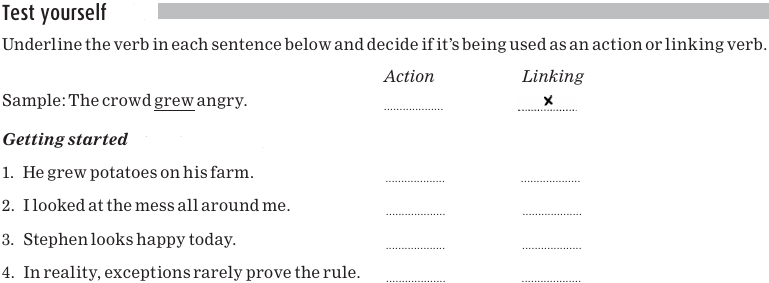
Answers
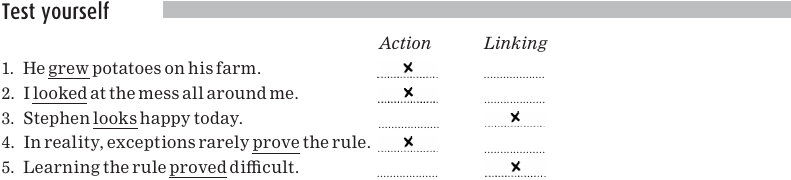
To enhance your understanding
Another important difference between action and linking verbs is that a linking verb can be
Followed by just an adjective, while an action verb cannot:
27. She is tired. (Tired is an adjective.)
28. The mayor looked victorious. (Victorious is an adjective.)
29. *She washed tired.
30. *The mayor voted victorious.
As you can see, is and looked are linking verbs in these sentences; washed and voted are Action verbs. However, since we haven’t yet talked about adjectives, just Keep this in mind as another difference between the two types of verbs.
To further enhance your understanding
Compare the following two sentences:
31a. She looked careful. (careful is an adjective)
31b. She looked carefully. (carefully is an adverb)
Can you sense the difference? In sentence 31a the verb looked is a linking verb, followed by the adjective careful; the basic meaning of the sentence is She looked like she was a careful person. In contrast, in sentence 31b looked is an action verb, followed by the adverb carefully; the basic meaning of this sentence is She looked around in a careful manner. Quick tip identifies yet another difference between linking verbs and action verbs.
Quick tip
Linking verbs are followed or modified by adjectives, while action verbs are followed or modified by adverbs.
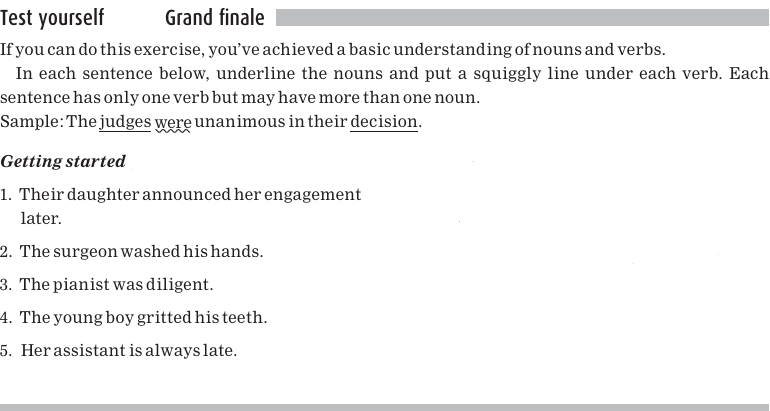
Answers

 الاكثر قراءة في Action verbs
 اخر الاخبار
اخبار العتبة العباسية المقدسة

الآخبار الصحية


 قسم الشؤون الفكرية يصدر كتاباً يوثق تاريخ السدانة في العتبة العباسية المقدسة
 "المهمة".. إصدار قصصي يوثّق القصص الفائزة في مسابقة فتوى الدفاع المقدسة للقصة القصيرة
 (نوافذ).. إصدار أدبي يوثق القصص الفائزة في مسابقة الإمام العسكري (عليه السلام)