The physical structure of cells
Key points: Living cells and organelles are enclosed by membranes; the concentrations of specific elements may vary greatly between different compartments due to the actions of ion pumps and gated channels. Cells, the basic unit of any living organism, range in complexity from the simplest types found in prokaryotes (bacteria and bacteria-like organisms now classified as archaea) and the much larger and more complex examples found in eukaryotes (which include animals and plants). The main features of these cells are illustrated in the generic model shown in Fig. 27.1. Crucial to all cells are membranes, which act as barriers to water and ions and make possible the management of all mobile species and of electrical currents. Membranes are lipid bilayers, approximately 4 nm thick, in which are embedded protein molecules and other components. Bilayer membranes have great lateral strength but they are easy to bend. The long hydrocarbon chains of lipids make the membrane interior very hydrophobic and impermeable to ions, which must instead travel through specific channels, pumps, and other receptors provided by special membrane proteins. The structure of a cell also de pends on osmotic pressure, which is maintained by high concentrations of solutes, including ions, imported during active transport by pumps. Prokaryotic cells consist of an enclosed aqueous phase, the cytoplasm, which contains the DNA and most of the materials used and transformed in the biochemical reactions. Bacteria are classified according to whether they are enclosed by a single membrane or have an additional intermediate aqueous space, the periplasm, between the outer membrane and the cytoplasmic membrane, and are known as ‘Gram-positive’ or ‘Gram-negative’, respectively, depending on their response to a staining test with the dye crystal violet. The much more extensive cytoplasm of eukaryotic cells contains sub compartments (also enclosed within lipid bilayers) known as organelles, which have highly specialized functions. Organelles include the nucleus (which houses DNA), mitochondria (the ‘fuel cells’ that carry out respiration), chloroplasts (the ‘photocells’ that harness light energy), the endo plasmic reticulum (for protein synthesis), Golgi (vesicles containing proteins for export), lysosomes (which contain degradative enzymes and help rid the cell of waste), peroxisomes (which remove harmful hydrogen peroxide), and other specialized processing zones.
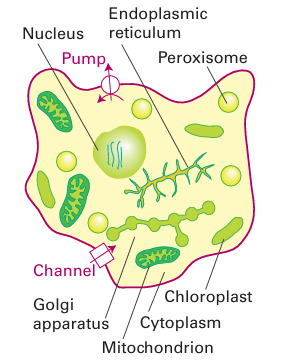
Figure 27.1 The layout of a generic eukaryotic cell showing the cell membrane, various kinds of compartments (organelles), and the membrane-bound pumps and channels that control the flow of ions between compartments.








