
الوضع الليلي


 12:15:25
  2023-07-20
  1388
1388
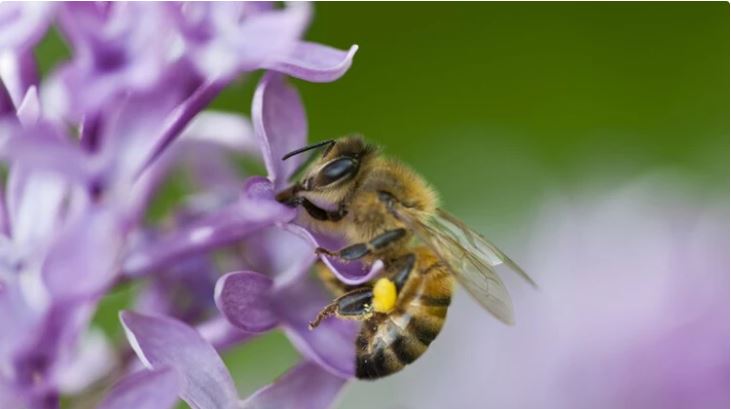
Studies have revealed that a type of sugar that kills honeybees could one day help treat cancer in humans, saving many lives.
Mannose is known as a sugar that is important for many functions in the human body. It cannot be broken down by insects, resulting in "honey bee syndrome".
And it was proven in laboratory tests that it prevents the growth of several types of cancer cells, such as chemotherapy, but scientists did not know the reason.
Mannose is found in many types of fruits, and is found naturally in the human body, where it participates in a vital process called glycosylation, where the body adds sugar to proteins to stabilize their structure and help them interact with other molecules, and malfunctions in glycosylation can cause life-threatening diseases.
Co-author Dr Hudson Friese, of Sanford Burnham Prepps, said: 'So far, the most promising therapeutic use of mannose has been to treat congenital disorders of glycosylation, which are diseases that can cause a wide range of severe symptoms throughout the body. But we believe there may be ways. To benefit from d-mannose against cancer and other diseases as well.”
He continued: "It has been known for more than a century that d-mannose is lethal to honey bees because they cannot process it the way humans can. We wanted to find out if there was any relationship between honey bee syndrome and d-mannose's anti-cancer properties, which could lead to a completely new approach to fighting cancer." .
To investigate, the team used genetically engineered human fibrosarcoma cells, a rare cancer that affects connective tissue, to recreate the honey bee syndrome.
They discovered that without the enzyme needed to process mannose, cells multiply slowly and are more vulnerable to chemotherapy.
"We found that inducing honeybee syndrome in these cancer cells rendered them unable to synthesize the building blocks of DNA and reproduce normally. This helps explain the anti-cancer effects of d-mannose that we observed in vitro," Friese added.
However, the effects are not likely to be high in all types of cancer.
"If we can find cancers with low activity of the enzyme that processes mannose, then treating them with mannose could give enough of a boost to make chemotherapy more effective. Many people assume that you always discover therapies in response to the disease, but sometimes you find a biology that can be useful for the treatment and then you have to find the right disease for it. But it can deal cancer an additional blow along with other therapies. And because mannose is found throughout the body naturally, it can improve cancer treatment without any unwanted side effects," Friese explained.
Reality Of Islam |
|

Plants are

After spend

A study of

Researchers
 9:3:43
2018-11-05
9:3:43
2018-11-05
10 benefits of Marriage in Islam
7:5:22
2019-04-08
benefits of reciting surat yunus, hud &
9:45:7
2018-12-24
advantages & disadvantages of divorce
11:35:12
2018-06-10
6:0:51
2018-10-16
8:39:51
2022-09-23
12:47:1
2022-12-20
10:35:40
2022-05-26
7:59:14
2018-06-21
5:57:34
2023-03-18
8:3:0
2018-06-21
al-hussain (peace be upon him)
10:18:1
2022-09-21
5:41:46
2023-03-18
| LATEST |
 HOME
HOME






















