الوضع الليلي


 9:45:25
  2023-04-08
  1451
1451
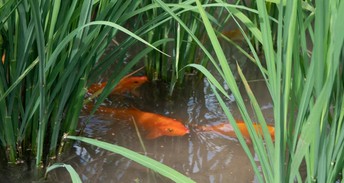
Growing rice with aquatic animals boosts production and reduces chemical use
A traditional Southeast Asian rice farming technique of raising fish and other aquatic livestock in paddies has potential to meet global food demands, improve the health of both people and the environment and earn producers an additional $150 billion a year worldwide, a new study finds.
Rice is a staple food that sustains about half of the world's population, and almost all of it is grown as a monoculture, or single crop species. Systems for growing rice and raising aquatic animals, such as fish, shrimp and ducks, together have existed for over 1,000 years. The practice is now rare, with only 1% of global rice production coming from co-culture farms.
Previous studies have found that combining rice farming with aquaculture increases land-use efficiency while reducing the need for commercial fertilizers, due to the animals' nutrient-rich droppings, and pesticides, because aquatic species eat many problem insects and weeds.
"Rice-animal co-culture systems provide an innovative strategy to tackle the multiple challenges society is facing today, including the food crisis, climate change, environmental pollution and resources shortage," said Baojing Gu, an ecologist at Zhejiang University and an author of the study.
The researchers found rice-animal farms increase annual rice yields by 4% while reducing nitrogen runoff by 16% and leaching by 13% in relation to rice monocultures.
"Co-culture [systems] produce more diverse food types and nutrient sources, contributing to food security," said Jinglan Cui, an ecologist at Zhejiang University and an author of the study.
The countries projected to benefit the most from this farming approach are in Asia, where suitable land is more plentiful. Producers in China and India are estimated to earn an extra $34.8 billion to $52.8 billion more per year, while producers in Indonesia, Bangladesh and Thailand can earn an extra $10.4 billion to $18.9 billion per year by switching to rice-animal co-culture.
Reality Of Islam |
|

A study of

Researchers

MIT enginee
 9:3:43
2018-11-05
9:3:43
2018-11-05
10 benefits of Marriage in Islam
7:5:22
2019-04-08
benefits of reciting surat yunus, hud &
9:45:7
2018-12-24
advantages & disadvantages of divorce
11:35:12
2018-06-10
6:0:51
2018-10-16
8:4:21
2022-01-08
11:2:27
2022-10-06
11:34:48
2022-06-29
11:11:59
2023-02-01
9:39:36
2022-12-28
1:16:44
2018-05-14
10:43:56
2022-06-22
5:41:46
2023-03-18
| LATEST |
 HOME
HOME