Ultrafiltration
Ultrafiltration is a technique related to dialysis, and can also be used to desalt protein solutions, effect buffer exchange, or concentrate protein solutions. It is more expensive than dialysis, however, as special equipment and membranes are required. In this technique, pressure is applied to the solution to cause a bulk flow of water and dissolved low molecular weight solutes, through the membrane, while high molecular weight solutes are retained.
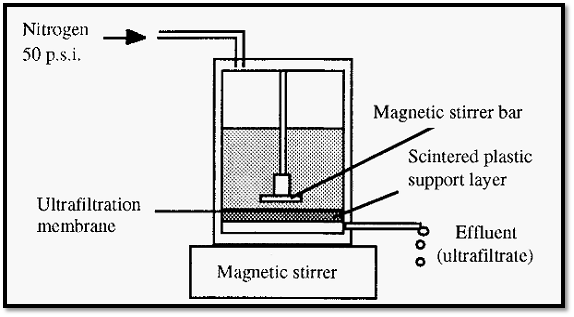
Figure 1. An ultrafiltration cell.
If a conventional dialysis membrane were used for ultrafiltration, it would soon become blocked with proteins trapped within the membrane. To overcome this problem, special membranes are used. These have a unimolecular sieving layer (a layer one molecule thick), supported by a much thicker support layer having a larger pore size. Such a membrane is called an anisotropic membrane, since it is not the same in all parts. The sieving side can be distinguished from the support side because the sieving side is shiny while the support side is dull.
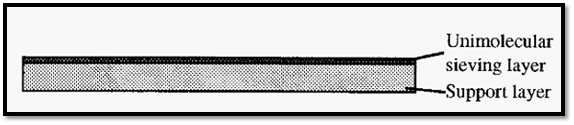
Figure 2. An anisotropic ultrafiltration membrane.
Whether or not a particular molecule will pass through an ultrafiltration membrane is determined at the unimolecular sieving layer. Proteins which are unable to pass through are rejected on the surface where they can easily be removed and the filter is therefore resistant to blocking.
The pressure exerted on the solution causes a flow of solvent through the membrane but immediately flow commences, a phenomenon known as concentration polarization occurs. This refers to the process whereby a secondary membrane layer of retained protein is formed.
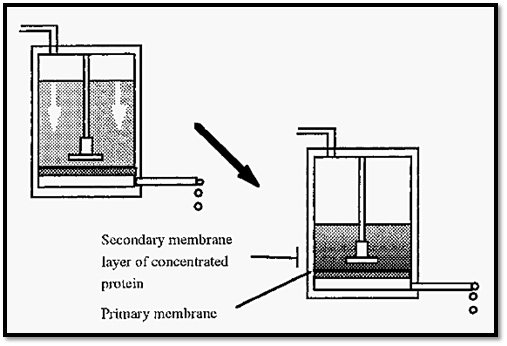
Figure 3. Concentration polarization: the formation of a secondary membrane layer.
The secondary membrane layer (SML) constitutes the major resistance to flow and thus determines the flow rate. At any given pressure, an equilibrium is rapidly set up whereby the transport of macromolecules into the SML, by bulk flow of solvent, is counterbalanced by diffusion of macromolecules out of the SML. The SML thus attains a stable thickness and the flow rate remains constant.
If the applied pressure is increased, the flow rate initially increases, but this results in more macromolecules being transported into the SML. The thickness of the SML thus increases, its resistance to flow increases, and the flow rate drops, virtually to the original value. Thus the flow rate is essentially independent of the applied pressure. Since the resistance is determined by the thickness of the SML, reducing this thickness will result in an increased flow rate. One way of decreasing the thickness of the SML is to stir the solution and thus increase the effective rate of back diffusion. This is the purpose of the stirring bar illustrated in Fig. 1.
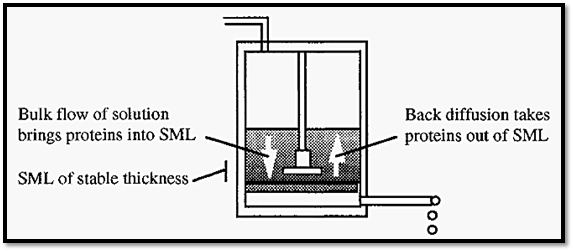
Figure 4. Dynamic nature of the secondary membrane layer (SML), at equilibrium.
An alternative way is by the use of a thin channel ultrafiltration module, in which the UF-membrane is sandwiched between two blocks of Perspex , with corresponding thin channels milled into each (Fig. 5). By pumping the solution at a high flow rate, turbulent flow can be induced in the channel and this stirs up the SML. The pressure applied to the membrane can be adjusted by restricting the outlet pipe on the high-pressure side of the membrane. Industrial scale UF is usually accomplished by such flow-through UF modules. The modules may be stacked, with the flow arranged in series or in parallel, and very high total membrane surface areas and overall flow rates can be obtained. An advantage for industrial scale applications is that such UF systems are one of the few protein fractionation methods that can run continuously, all other methods requiring batch wise operation.

Figure 5. A thin-channel flow-through ultrafiltration module.
The secondary membrane determines the flow rate but the primary membrane (the anisotropic membrane) determines the selectivity, i.e. the size of molecules that will be retained. Primary membranes can be purchased with different “exclusion limits”, ranging from 500-100,000 Daltons. Conceptually, the “exclusion limit” is the molecular weight of a globular protein which will just be retained by the membrane - which is the same as the molecular weight of a protein which will just pass through the membrane. In practice, however, there is not a clear-cut distinction between the size of molecule which will be retained and that which will pass through the membrane, since the pore sizes in any membrane have a normal (Gaussian)distribution.
1. Desalting or buffer exchange by ultrafiltration
Ultrafiltration may be used to change the buffer in which a protein is suspended, either for another buffer or for distilled water. In either case the approach used is the same. The solution is reduced to a small volume, rediluted in the new buffer (or distilled water), reduced to a small volume again etc., the process being repeated several times, until the protein is in the new buffer only. The process is analogous to the washing of the retentate on a paper filter and the same equation applies, i.e.:-
Where
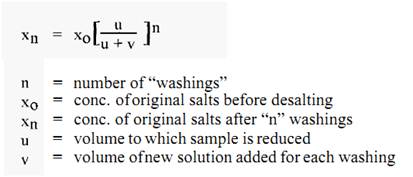
Consequently, to achieve buffer exchange (or desalting) in the minimum time, the factors “u” and “v” should be kept to a minimum, since the time taken depends upon the total volume of washing solution used. (This is a useful equation to remember when rinsing ones laundry).
2. Size fractionation by ultrafiltration
Proteins may be fractionated into size groups by ultrafiltration, by passing the solution, successively, through membranes of decreasing pore size. The largest proteins will be retained by the membrane with the largest pore size, etc.
References
Dennison, C. (2002). A guide to protein isolation . School of Molecular mid Cellular Biosciences, University of Natal . Kluwer Academic Publishers new york, Boston, Dordrecht, London, Moscow .








