الوضع الليلي


 8:39:18
  2019-01-29
  2029
2029
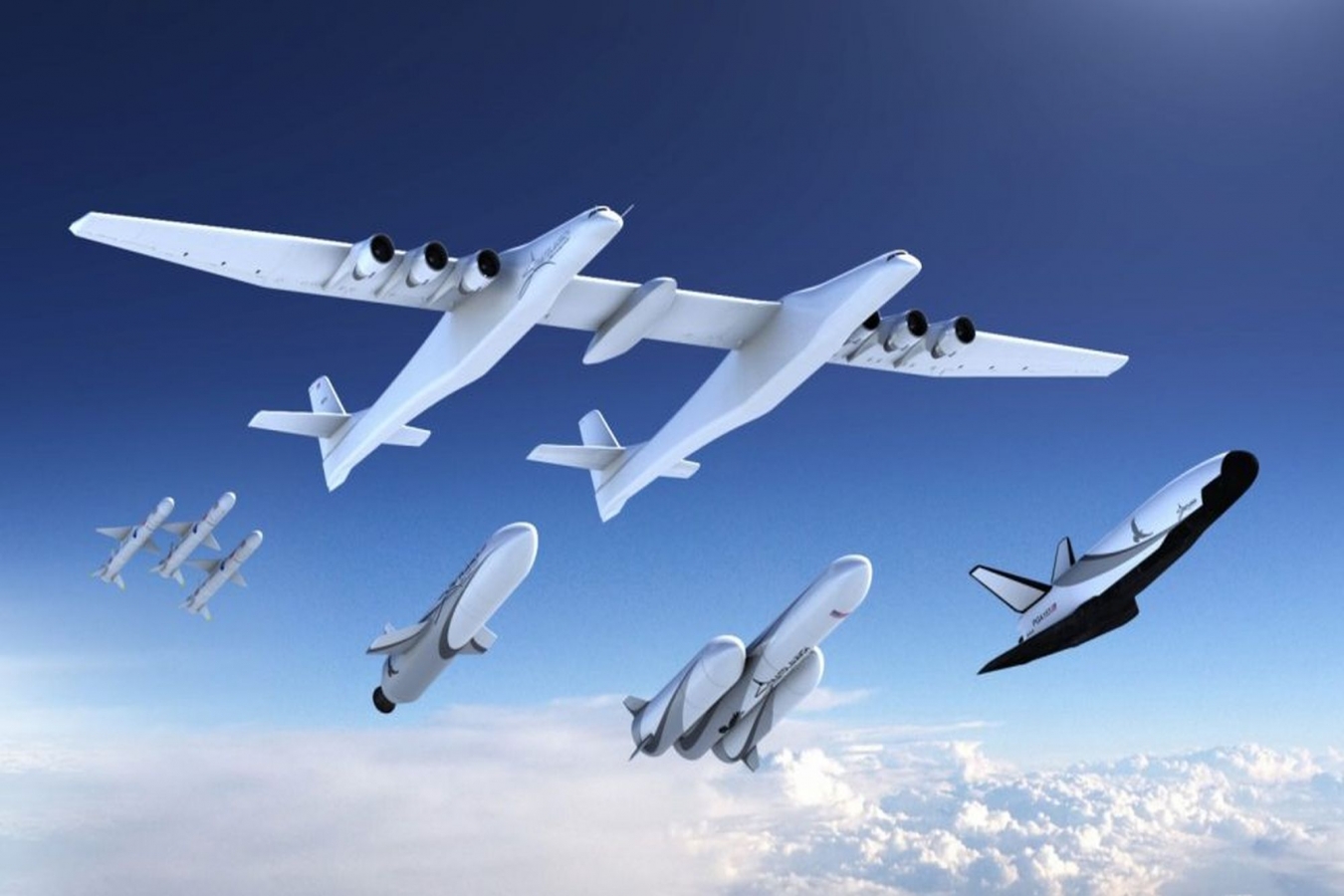
Stratolaunch, the private spaceflight company building the world's largest (and, perhaps, most bizarre-looking) airplane, is scaling back its operations.
While Stratolaunch will continue to work on its massive, double-bodied carrier plane, which is taller than a four-story building from ground to tail tip, it will abandon plans for a new family of rockets. Those were designed to be launched from the plane in midair.
"Stratolaunch is ending the development of their family of launch vehicles and [a] rocket engine," a Stratolaunch spokesperson said in a statement to Live Science. "We are streamlining operations, focusing on the aircraft and our ability to support a demonstration launch of the Northrop Grumman Pegasus XL air-launch vehicle. We are immensely proud of what we have accomplished and look forward to first flight in 2019."
Stratolaunch Systems Corp. was founded by billionaire Paul Allen, the Microsoft co-founder who died last October at age 65.
Allen's vision was to create a huge carrier plane that could take off on a runway and then launch rockets into low-Earth orbit from cruising altitude. The concept is meant to enable satellites to be deployed in multiple orbits during a single mission.
Stratolaunch has planned to use Pegasus XL air-launch rockets, built by Orbital ATK, to carry satellites to orbit during its first missions. With a wingspan of 385 feet (117 meters), the Stratolaunch aircraft can carry up to three of the Pegasus rockets on a single flight, with the rockets attached underneath the plane's conjoined center wing.
But in August 2018, Stratolaunch announced that it was also developing its own family of launchers, including a "Medium Launch Vehicle," which would have carried a 7,500-lb. (3,400 kilograms) payload. Those launchers were set to be ready for flight as early as 2022.
GeekWire, which first reported the news about Stratolaunch late last week, also reported that more than 50 Stratolaunch employees were being laid off amid the new strategy. The Stratolaunch spokesperson did not comment on this matter.
The company has not yet set a date for its first flight, but Stratolaunch has been steadily performing tests at California's Mojave Air and Space Port. The vehicle reached 136 mph (219 km/h) during its latest test-drive on the runway on Jan. 9.
By Megan Gannon, Live Science
Reality Of Islam |
|

A study of
Researchers

MIT enginee
 9:3:43
2018-11-05
9:3:43
2018-11-05
10 benefits of Marriage in Islam
7:5:22
2019-04-08
benefits of reciting surat yunus, hud &
9:45:7
2018-12-24
advantages & disadvantages of divorce
11:35:12
2018-06-10
6:0:51
2018-10-16
2:34:48
2022-01-18
10:43:56
2022-06-22
3:43:50
2022-11-05
7:32:24
2022-02-14
1:34:8
2022-02-01
2:33:4
2023-02-15
2:11:12
2022-10-15
5:41:46
2023-03-18
| LATEST |
 HOME
HOME