
الوضع الليلي


 1:47:15
  2025-10-19
  1874
1874
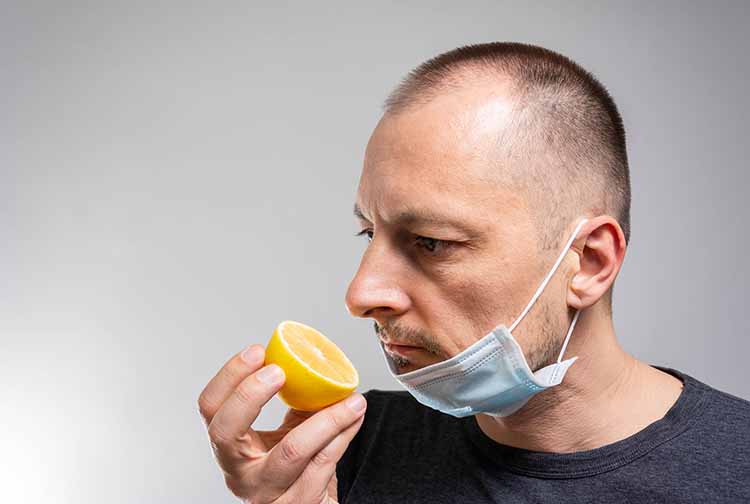
The impacts of the ongoing Covid-19 pandemic continue to be felt across the world, but some consequences are more noticeable than others. New research suggests a large proportion of people may have lost their sense of smell after catching Covid-19, without even realizing it.
It's well known that getting COVID-19 can lead to smell blindness (anosmia) or a partial loss of smell (hyposmia). In fact, it happens with a lot of viral infections, as the viruses interfere with various cells and receptors in the nasal passages. The sense of smell often comes back – but not always.
Here, researchers in the US wanted to take a closer look at the long-term consequences of COVID-19 on our smelling capabilities.
They ran smell tests on 2,956 volunteers with a history of COVID-19 infections and 569 who hadn't caught the virus. On average, the smell testing took place 671 days after participants had first been tested for COVID-19.
Of the COVID-19 group, 1,393 thought they had issues with smell, and tests confirmed about 80 percent of them did. Surprisingly, the other 1,563 people in that group didn't report any smell problems, but test results showed 66 percent of them had hyposmia or anosmia after their COVID-19 infections.
"Our findings confirm that those with a history of COVID-19 may be especially at risk for a weakened sense of smell, an issue that is already underrecognized among the general population," says general internist Leora Horwitz, from the New York University Grossman School of Medicine.
Of those without a COVID-19 history, 60 percent showed deficiencies in smell, which is oddly high – even though the condition is generally underreported. The researchers suggest some of these people may have had an infection and not realized it.
Extrapolations aren't always accurate, but if the patterns in the thousands of participants studied here are consistent across the global population, then we could be looking at millions of people with hyposmia who don't know about it.
"Our findings corroborate prior survey studies suggesting that SARS-CoV-2 is associated with persistent olfactory dysfunction and confirm small prior objective studies finding that patients underestimate their smell loss," write the researchers in their published paper.
As for why so many people with COVID-related smell loss haven't noticed it, that's unclear. Potentially, there might also be damage to the brain that's limiting people's awareness of their own senses, the researchers suggest.
There's a lot of related research here, though. A loss of smell, for example, has previously been associated with conditions such as Alzheimer’s. Smell and cognitive function seem closely linked, and we know COVID-19 can affect both.
Our sense of smell is about much more than the enjoyment of anticipating a meal or touring round a garden: It also alerts us to danger, whether that's a gas leak or food we shouldn't eat.
With that in mind, the researchers are hoping that more can be done to understand the long-term impacts of this problem – and perhaps develop ways that a sense of smell knocked out by infection can be brought back.
"These results suggest that healthcare providers should consider testing for loss of smell as a routine part of post-COVID care," says Horwitz. "While patients may not notice right away, a dulled nose can have a profound impact on their mental and physical well-being."
Reality Of Islam |
|

Plants are

After spend

A study of

Researchers
 9:3:43
2018-11-05
9:3:43
2018-11-05
10 benefits of Marriage in Islam
7:5:22
2019-04-08
benefits of reciting surat yunus, hud &
9:45:7
2018-12-24
advantages & disadvantages of divorce
11:35:12
2018-06-10
6:0:51
2018-10-16
11:34:48
2022-06-29
2:11:12
2022-10-15
11:11:59
2023-02-01
8:25:12
2022-03-09
allah will not answer all your prayers
6:56:28
2022-01-01
2:34:48
2022-01-18
9:39:36
2022-12-28
5:41:46
2023-03-18
| LATEST |
 HOME
HOME






















