الوضع الليلي


 6:49:13
  2025-03-06
  1559
1559
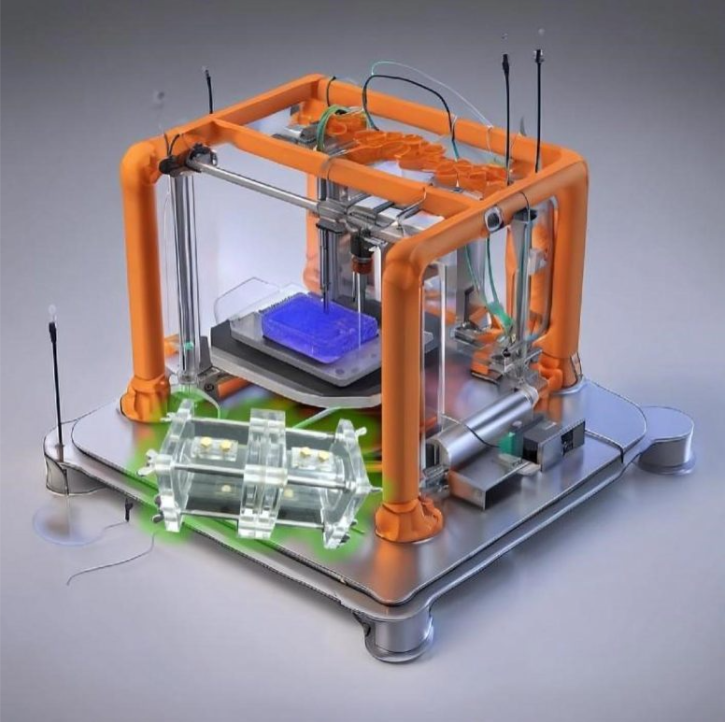
3D printing is revolutionizing microbial electrochemical systems (MES) by enabling precise reactor design, custom electrode fabrication, and enhanced bioprinting applications. These innovations optimize pollutant degradation and energy production, with significant implications for sustainability and environmental management.
Microbial electrochemical systems (MES) are emerging as a promising technology for addressing environmental challenges by leveraging microorganisms to transfer electrons. These systems can simultaneously degrade pollutants and generate electricity, making them valuable for sustainable wastewater treatment and energy production.
However, conventional methods for constructing MES components often lack design flexibility, limiting performance optimization. To overcome these limitations and enhance MES efficiency, innovative fabrication techniques are needed—ones that allow precise control over reactor structures and functions.
A recent review published in Frontiers of Environmental Science & Engineering by researchers from the Technical University of Denmark’s Department of Environmental and Resource Engineering explores how 3D printing is transforming MES development. The study examines advancements in reactor design, electrode fabrication, and bioprinting, highlighting how 3D printing can enhance MES performance through improved design flexibility and precision.
Innovations in Reactor Design and Electrode Fabrication
The review highlights several innovations made possible by 3D printing. One of the most significant advancements is the ability to rapidly prototype and customize reactor designs. This flexibility enables researchers to optimize fluid dynamics and mass transfer within reactors, resulting in improved system performance.
Moreover, the precision of 3D printing allows for the fabrication of electrodes with tailored geometries and materials—key factors in enhancing electron transfer and biocompatibility. For example, 3D-printed electrodes can be designed with specific surface properties and porosity to maximize microbial adhesion and facilitate efficient electron exchange.
Additionally, the integration of bioprinting techniques enables the construction of stable biofilms on electrodes. By meticulously controlling the architecture and composition of these biofilms, researchers can optimize interactions between microbes and electrodes, further boosting MES efficiency. These breakthroughs address existing design limitations and unlock new possibilities for sustainable applications in wastewater treatment and bioenergy production.
Expert Insights on the Impact of 3D Printing
Dr. Yifeng Zhang, a leading expert in environmental engineering, weighed in on the significance of these findings. He remarked, “The integration of 3D printing technology into MES represents a major breakthrough. It provides the precision and flexibility needed to optimize reactor designs and electrode structures, which are critical for enhancing system performance. This innovation not only accelerates the development of sustainable environmental technologies but also opens up new avenues for addressing global challenges in energy and waste management. The potential applications are vast, and we are excited to see how this technology will continue to evolve and impact the field.”
The application of 3D printing in MES promises far-reaching implications for multiple sectors, including environmental management and renewable energy. In wastewater treatment, optimized MES reactors could lead to more efficient pollutant degradation, mitigating the environmental impact of industrial and municipal waste. For energy generation, advanced electrode designs could boost the power output of microbial fuel cells, positioning them as a viable alternative for sustainable energy production.
Moreover, the scalability and customization of 3D printing allow for tailored MES solutions across a wide range of applications, from small-scale settings to large industrial operations. This technology holds the potential to contribute to a more sustainable future by enhancing resource utilization and reducing carbon footprints.
Reality Of Islam |
|
A study of

Researchers
MIT enginee
 9:3:43
2018-11-05
9:3:43
2018-11-05
10 benefits of Marriage in Islam
7:5:22
2019-04-08
benefits of reciting surat yunus, hud &
9:45:7
2018-12-24
advantages & disadvantages of divorce
11:35:12
2018-06-10
6:0:51
2018-10-16
a hero waters thirsty wild animals
9:4:9
2022-01-06
8:4:21
2022-01-08
9:39:36
2022-12-28
11:11:59
2023-02-01
9:42:16
2022-10-19
7:45:39
2018-06-21
al-hussain (peace be upon him)
10:18:1
2022-09-21
5:41:46
2023-03-18
| LATEST |
 HOME
HOME