الوضع الليلي


 6:57:46
 2018-10-14
 2540
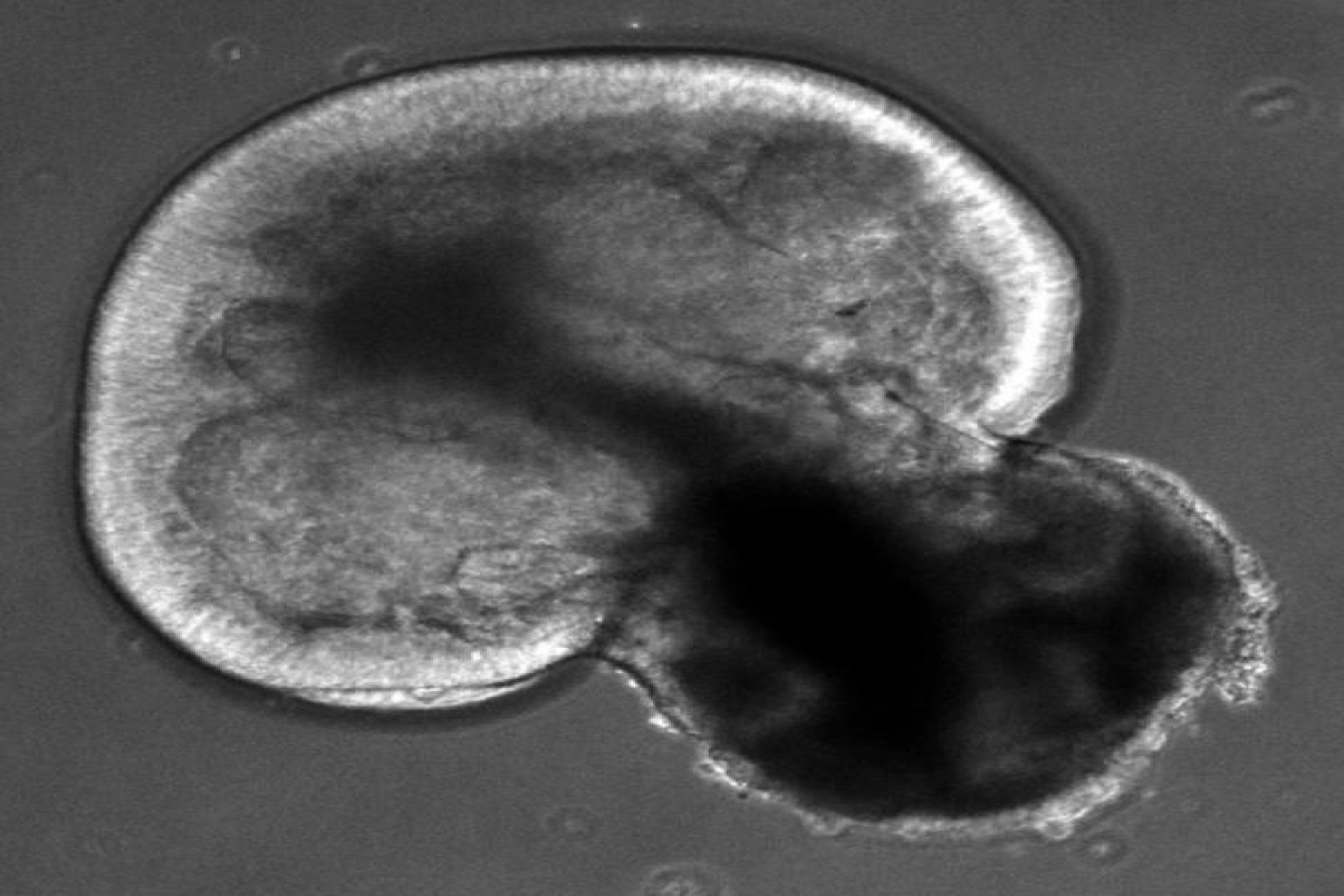
If you've recently admired a sunset, a rainbow, or the reds and golds of autumn foliage, you can thank the color-detecting cone cells in your eyes for your ability to see those vivid hues. And now, scientists have figured out how those color cells develop, by coaxing stem cells to grow into tiny blobs of eye tissue in the lab.
In the human eye, there are three types of cone cells that regulate color vision, sensing red, blue or green light, but little is known about how these specialized cells emerge in the eyes of a growing fetus. However, researchers recently provided a glimpse of these formative mechanisms, by growing organoids — very small, primitive organs — that were made of eye cells, so they could observe the cells as they developed.
Though the tiny organoids didn't look like fully formed eyes, they contained photoreceptors that respond to light, and the cells (and their genes) still behaved as cone cells do in a human eye. Remarkably, the color-sensing cells in the lab-grown eye tissue organized themselves as those cells do in a fetus, with blue-light-sensing cone cells showing up first, followed by cells that sense red and green light. Experiments with these cells offered a first glimpse of the mechanisms that produce our unique color vision, the scientists reported in a new study.
Blue cone cells were already known to develop before their red and green neighbors. But it was unclear why they appeared in that order and what prompted the cells "to choose those fates" as blue, red or green, said lead study author Kiara Eldred, a doctoral candidate in the Department of Biology at Johns Hopkins University (JHU) in Maryland.
"We weren't sure what in a development context cued those cells to be different from each other," Eldred told Live Science.
The scientists directed stem cells to become eye tissue, but exactly what type of eye tissue is determined by the cells themselves, said study co-author Robert Johnston Jr., an assistant professor in the JHU Department of Biology.
"They just develop and grow as a retina in a dish," Johnston told Live Science.
Because the researchers wanted their growing mini-eyes to follow the same timetable as the eyes of a fetus in the womb, they monitored the retinal tissues' development for nine months.
What's more, prior research in mice and zebrafish hinted that the thyroid hormone helped to trigger the development of cells linked to color vision, Eldred said. To test that, the scientists used the gene-editing tool CRISPRto manipulate the cone cells' receptors for the hormone, to see how that would change their growth patterns.
They found that the levels of a thyroid hormone that were present at different stages in the eye's development played a big part in shaping the cells' identity. When the researchers disabled the receptors for the hormone, they grew mini-eyes that had only blue-sensing cells, capable of seeing only blue light. And when they flooded the organoids with extra thyroid hormone early in the growth process — before blue cells could form — all the color cells developed as red and green, the researchers reported.
"That told us that we understood the mechanism enough that we could grow human retinal cells in a dish, and we could tell them what kind of cells we wanted to make," Johnston told Live Science.
In addition to revealing secrets of color vision, lab-grown eye tissue may prove useful for studying other aspects of sight that are unique to humans, and could provide insights into the treatment of blindness and glaucoma, Johnston said.
Reality Of Islam |
|
Scientists
Tiny magnet

Researchers

Keeping sil
 9:3:43
2018-11-05
10 benefits of Marriage in Islam
7:5:22
2019-04-08
benefits of reciting surat yunus, hud &
9:45:7
2018-12-24
advantages & disadvantages of divorce
11:35:12
2018-06-10
6:0:51
2018-10-16
8:19:41
2018-06-21
8:25:12
2022-03-09
6:14:17
2018-06-21
9:39:36
2022-12-28
2:11:12
2022-10-15
8:30:23
2022-03-03
1:34:8
2022-02-01
5:41:46
2023-03-18
| LATEST |
 HOME