الوضع الليلي


 1:29:2
  2023-05-20
  1792
1792
"Khums" which is another kind of tax, is compulsory on five things; the booty taken from an enamy in war; the pearls and minerals drawn from the sea; hidden treasures mineral substances extracted from the land; and lawfully-gained money which has been mixed with unlawful money, or profits gained from business, or land transferred to a "dhimmi" (a Christian or a Jew, living within the Muslim nation) from a Muslim.
The obligation of "khums" is based on the command of Almighty God: "Know that the one fifth of what you get as booty is the share of God, the Prophet (s.a.w.), the relations, the orphans, the beggars and the wayfares" (Surah Anfal). Moreover, we believe that "khums" is a right which God the Almighty paricularly reserved for the descendants of Muhammad (s.a.w.). Since charity is unlawful for the children of the Holy Prophet (s.a.w.) (they cannot receive zakat), "khums" is a kind of compensation from the bounty of God the Almighty.
"Khums" is divided into six parts: three are of God, the Prophet (s.a.w.) and his kith and kin; and the other three parts must be paid to the holy Imam, when he is present. However, "khums" should be handed over to the representative of the Imam, that is the "just mujtahid", when the former is in occultation, The Imam is to use these funds to protect the religion of Islam and to complete the development plans of the Muslim nations. This is the real purpose for which it is to be used; it must be stressed that Sayyid Muhammad Alusi wrote in a rather flippant manner in his commentary on the Qur'an when he said: "In these days the money accumulated from "khums" should be placed in the cellar."
This, in fact, refers to a fictitious story current among certain of our Sunni brothers, which relates that the Shi'as say that their Imam disappeared in a cellar; we need hardly point out that occutation of the Imam had not the slightest connection with the aforementioned cellar.
The Ithna Ashari Shi'as go to visit the cellar at Samarrah, because it was the place where the Holy Imam used to offer "tahajjud" (mustahab night prayers). Also that was the place where the father and the grandfather of the Holy Imam used to offer prayers to God, the Almighty.
The remaining three parts of "khums", as we have said, are the right of the poor people of the Hashimi family (that is the family of the Prophet).
Such were the commandments of "khums" which have been followed from the time of the Holy Prophet (s.a.w.) until now. After the death of the Holy Prophet (s.a.w.), the Muslim rulers suppressed this right to "khums" of the Al Hashim (the progeny of the Prophet) and instead collected the money into the baytu 'l-mal in order that they themselves could control its use. This family, who had no right to "zakat", were now also deprived of "khums".
Reality Of Islam |
|

Changing a
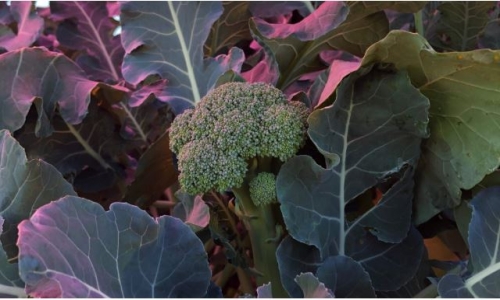
Plants are

After spend

A study of
 9:3:43
2018-11-05
9:3:43
2018-11-05
10 benefits of Marriage in Islam
7:5:22
2019-04-08
benefits of reciting surat yunus, hud &
9:45:7
2018-12-24
advantages & disadvantages of divorce
11:35:12
2018-06-10
6:0:51
2018-10-16
7:6:7
2022-03-21
1:34:8
2022-02-01
9:42:16
2022-10-19
8:4:21
2022-01-08
6:28:21
2022-12-20
2:2:13
2022-10-08
8:25:12
2022-03-09
5:41:46
2023-03-18
| LATEST |
 HOME
HOME