الوضع الليلي


 7:54:44
  2023-04-23
  1406
1406
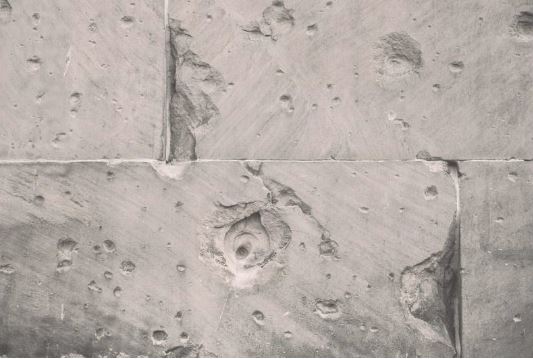
Researchers develop carbon-negative concrete
A viable formula for a carbon-negative, environmentally friendly concrete that is nearly as strong as regular concrete has been developed at Washington State University.
In a proof-of-concept work, the researchers infused regular cement with environmentally friendly biochar, a type of charcoal made from organic waste, that had been strengthened beforehand with concrete wastewater. The biochar was able to suck up to 23% of its weight in carbon dioxide from the air while still reaching a strength comparable to ordinary cement.
The research could significantly reduce carbon emissions of the concrete industry, which is one of the most energy- and carbon-intensive of all manufacturing industries. The work, led by doctoral student Zhipeng Li, is reported in the journal, Material letters.
"We're very excited that this will contribute to the mission of zero-carbon built environment," said Xianming Shi, professor in the WSU Department of Civil and Environmental Engineering and the corresponding author on the paper.
More than 4 billion tons of concrete are produced every year globally. Making ordinary cement requires high temperature and combustion of fuels. The limestone used in its production also goes through decomposition which produces carbon dioxide, so that cement production is thought to be responsible for about 8% of total carbon emissions by human activities worldwide.
Researchers have tried adding biochar as a substitute in cement to make it more environmentally friendly and reduce its carbon footprint, but adding even 3% of biochar dramatically reduced the strength of the concrete. After treating biochar in the concrete washout wastewater, the WSU researchers were able to add up to 30% biochar to their cement mixture. The paste made of the biochar-amended cement was able to reach a compressive strength after 28 days comparable to that of ordinary cement of about 4,000 pounds per square inch.
"We're committed to finding novel ways to divert waste streams to beneficial uses in concrete; once we identify those waste streams, the next step is to see how we can wave the magic wand of chemistry and turn them into a resource," said Shi. "The trick is really in the interfacial engineering—how you engineer the interfaces in the concrete."
The caustic concrete washout water is a sometimes problematic waste material from concrete production. The wastewater is very alkaline but also serves as a valuable source of calcium, said Shi. The researchers used the calcium to induce the formation of calcite, which benefits the biochar and eventually the concrete incorporating the biochar.
"Most other researchers were only able to add up to 3% biochar to replace cement, but we're demonstrating the use of much higher dosages of biochar because we've figured out how to engineer the surface of the biochar," he said.
The synergy between the highly alkaline wastewater that contains a lot of calcium and the highly porous biochar meant that calcium carbonate precipitated onto or into the biochar, strengthening it and allowing for the capture of carbon dioxide from the air. A concrete made of the material would be expected to continue sequestering carbon dioxide for the lifetime of the concrete, typically 30 years in pavement or 75 years in a bridge.
In order to commercialize this technology, the researchers have been working with the Office of Commercialization to protect the intellectual property and have filed a provisional patent application on their carbon -negative concrete work.
Reality Of Islam |
|
A study of
Researchers
MIT enginee
 9:3:43
2018-11-05
9:3:43
2018-11-05
10 benefits of Marriage in Islam
7:5:22
2019-04-08
benefits of reciting surat yunus, hud &
9:45:7
2018-12-24
advantages & disadvantages of divorce
11:35:12
2018-06-10
6:0:51
2018-10-16
3:42:22
2021-12-24
7:26:19
2022-04-08
6:28:21
2022-12-20
4:2:19
2022-10-10
2:42:26
2023-02-02
2:13:43
2022-05-27
7:0:55
2022-05-17
5:41:46
2023-03-18
| LATEST |
 HOME
HOME